

Human Behaviour | 6 min read
Why Do People Behave the Way They Do?
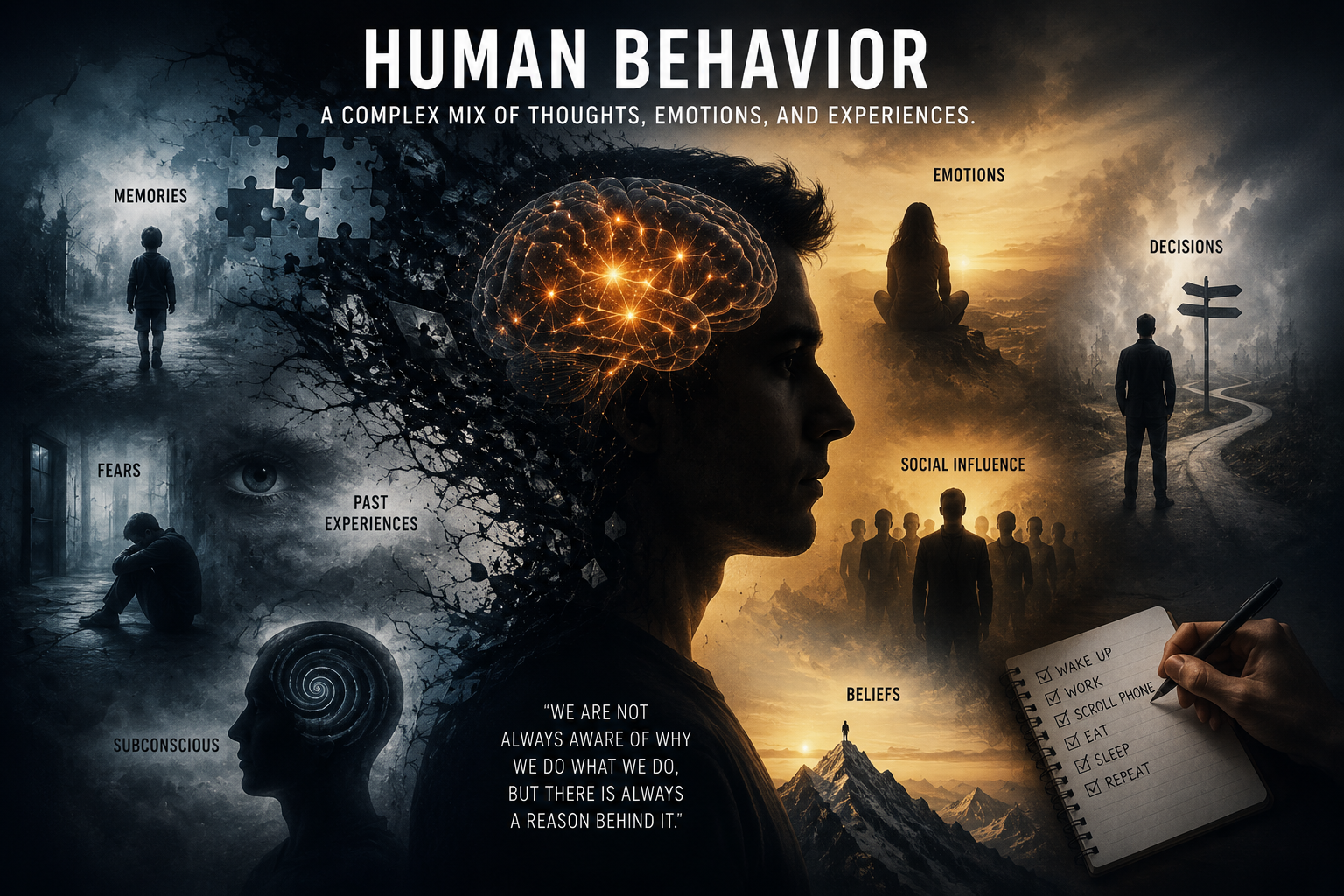
Human behavior is one of the greatest mysteries of life. Every smile, every lie, every act of kindness, and every difficult decision is influenced by countless factors working behind the scenes. While we often believe our actions are completely rational, psychology tells a different story. Our experiences, emotions, environment, and subconscious mind shape our behavior in ways we rarely notice.
Have you ever wondered why you trust some people instantly while feeling uneasy around others? Or why certain memories trigger strong emotions years later? The answers lie within the fascinating world of human behavior.
The Hidden Influence of the Subconscious Scientists believe that a significant portion of our daily decisions is driven by the subconscious mind. It quietly stores memories, emotions, fears, habits, and beliefs accumulated over a lifetime. Even when we think we’re making logical choices, our subconscious often influences the outcome without our awareness.
This explains why people sometimes react emotionally before thinking logically. The brain is designed to prioritize survival, meaning emotions often take control before reason has a chance to intervene.
The Power of First Impressions It takes only a few seconds for the brain to form an opinion about someone new. Facial expressions, tone of voice, body language, clothing, and eye contact all contribute to these instant judgments. Although first impressions can be surprisingly accurate, they are also influenced by personal biases and past experiences. This is why two people can meet the same person and walk away with completely different opinions.
Why We Follow the Crowd Humans are social creatures. Throughout history, belonging to a group increased the chances of survival. That instinct still exists today. Whether it’s joining a popular trend, laughing because everyone else is laughing, or agreeing with a majority opinion, social influence affects us more than we realize. This phenomenon, known as social conformity, explains why people often change their behavior to fit in—even when they privately disagree.
Emotions Shape More Than Logic We like to think we make decisions based on facts, but emotions play a much larger role than most people realize. Fear can prevent us from taking opportunities. Anger can cloud our judgment. Happiness can make us more trusting. Stress can reduce our ability to think clearly. Understanding emotional triggers is one of the most important steps toward understanding ourselves and others.
The Mystery of Habits Nearly half of our daily actions are habits rather than conscious decisions. From checking our phones first thing in the morning to following the same route to work, our brains create routines to conserve mental energy. While habits make life easier, they can also trap us in unhealthy behaviors if we’re not aware of them. Fortunately, habits can be changed by consistently replacing old routines with healthier ones.
Body Language Often Speaks Louder Than Words Communication isn’t limited to spoken language. Posture, facial expressions, gestures, and eye contact reveal emotions that words sometimes hide. Crossed arms may suggest discomfort. Avoiding eye contact can indicate nervousness or uncertainty. A genuine smile involves both the mouth and the eyes. Leaning forward often shows interest and engagement. Learning to read body language helps us understand others beyond what they choose to say. Why We Remember Negative Experiences More Clearly Have you ever noticed how criticism stays with you longer than compliments? This happens because of negativity bias—our brain naturally gives more attention to negative experiences than positive ones. From an evolutionary perspective, remembering dangers increased our ancestors’ chances of survival. Today, this same mechanism can make setbacks feel much larger than successes. Recognizing this bias allows us to develop a more balanced and realistic perspective.
Can Human Behavior Be Predicted? Psychologists can often identify patterns in behavior, but predicting an individual’s actions with certainty is impossible. Every person is shaped by unique experiences, genetics, culture, personality, and environment. Human behavior isn’t controlled by a single factor. It’s the result of countless influences interacting every moment of our lives. Final Thoughts The more we study human behavior, the more we realize how little we truly know. Our actions are influenced by emotions, memories, habits, relationships, biology, and countless subconscious processes working beneath the surface. At Shadow Files, we explore these fascinating mysteries—not just to understand why people behave the way they do, but to better understand ourselves. Because every action has a reason. Every emotion has a story. And every mind holds secrets waiting to be discovered.
Shadow Gallery
A visual journey into the mysteries of human behavior and the mind.


